Capturing is the one habit Gobi asks of you. Everything else — the Summary, the accumulating core, the answers your agent gives — flows from this. Here’s how it works, start to stop.

Start a capture

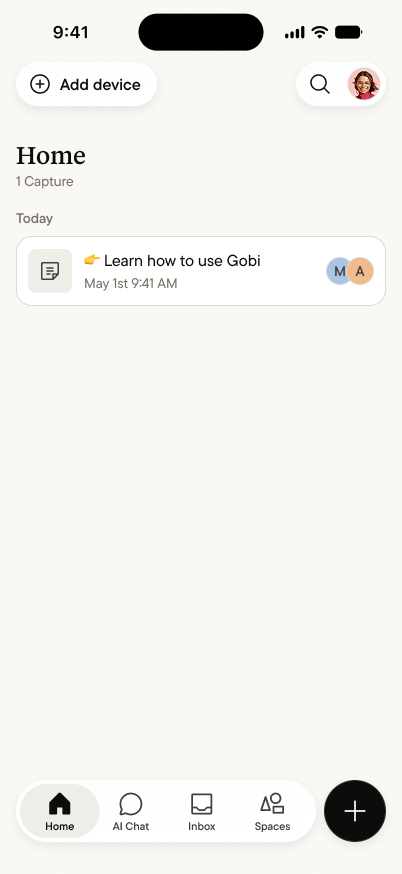
The capture button on Home
Tap the + button — it’s with you on every tab. A capture can be a conversation, a meeting, a voice memo to yourself, a typed note, or a photo. For anything spoken, just start talking; Gobi listens from the moment you begin.
Capturing with someone across the table? A simple “mind if I capture this?” is all it takes — most people say yes, and here’s how to handle it gracefully.

While you’re capturing

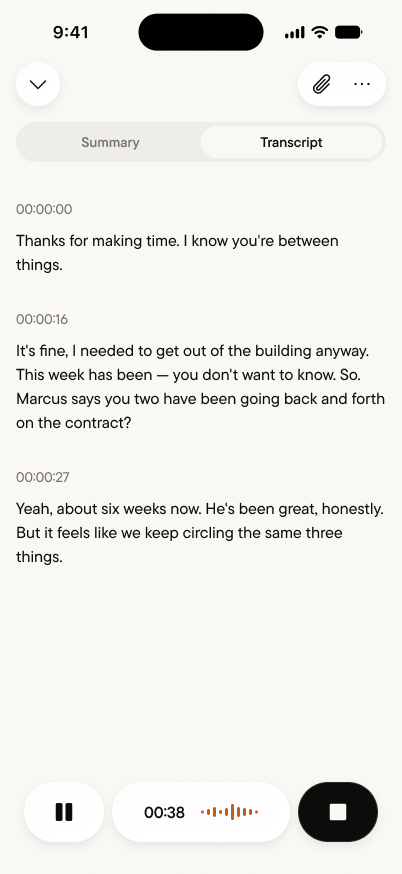
A capture in progress with the live transcript
The transcript appears live as the conversation happens — a quiet confirmation that Gobi is hearing what you’re hearing. The controls stay simple:
  • Pause when the conversation goes somewhere that doesn’t need capturing; tap again to resume.
  • Stop when you’re done. There’s nothing to save — stopping is saving.
Your phone can go back in your pocket mid-capture. The capture continues; your attention belongs to the person in front of you.

Choose where it lands

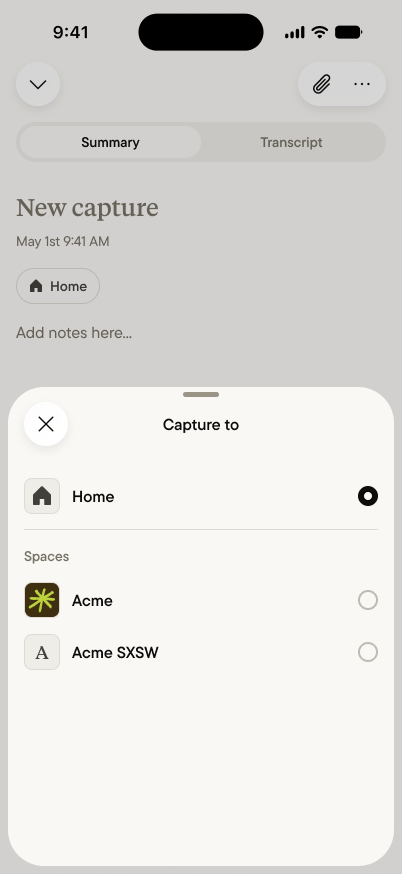
Choosing the destination for a capture
Every capture lands in your Home — your private core — by default. If a capture belongs somewhere specific, point it there as you start: captures routed to a Space arrive already shared, with nothing to move later. Purpose first, capture second.

When you stop

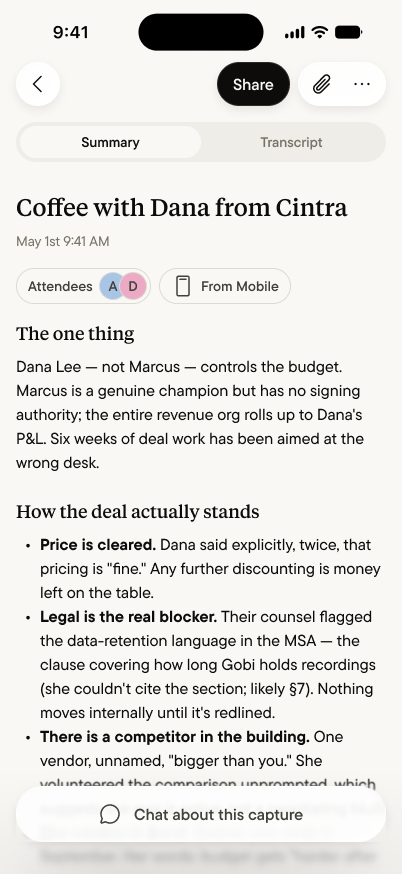
The finished Summary of a capture
The moment you stop, Gobi gets to work. Within moments the capture becomes a Summary — the one thing that mattered, where things stand, who was there, what’s next — with the full transcript one tab away. Add your own notes, correct the attendees, or share it to your team — or do nothing, and it simply becomes part of what your agent knows.

Good captures, honestly

  • Closer is better. Phone on the table beats phone in the bag; a noisy room is workable, a noisy room at arm’s length is better.
  • Names help. When people say each other’s names in conversation, the transcript and attendees get sharper.
  • Short is fine. A thirty-second voice memo is a real capture. The habit matters more than the length.