

Reading a transcript
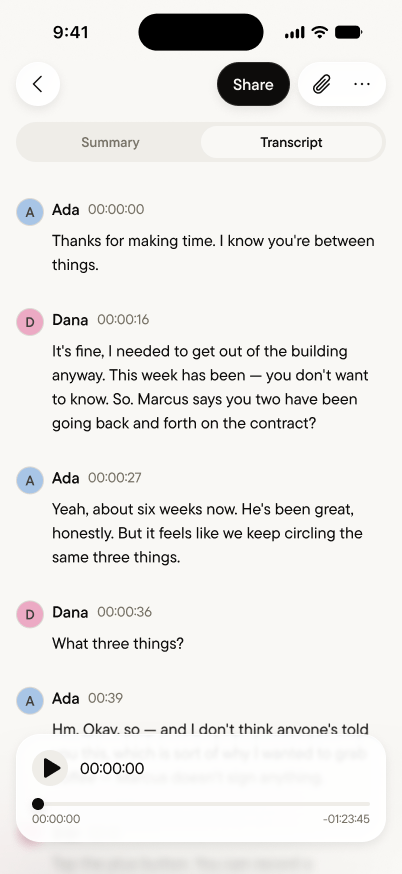
Each turn shows who spoke and when. Speakers are matched to the capture’s attendees — correct an attendee once and their turns follow. Timestamps run from the start of the capture, so a moment in the transcript is a moment you can jump to. During a capture, this same view runs live — the words appearing as they’re spoken. What you see mid-conversation is what you’ll find here after.Playback
Tap a moment to hear it. The player follows the transcript — skip back ten seconds for the sentence you want to hear twice, slow it down for the number someone said too fast. Reading tells you what was said; hearing it back carries the tone.When to reach for it
Honestly: less often than you’d expect. The Summary carries the meaning, and your agent answers most “what did they say” questions with the receipts already attached. The transcript earns its keep in the exact moments:- The precise quote. When “roughly what she said” isn’t enough — a number, a commitment, the wording of an offer.
- The disputed moment. When memories differ, the transcript settles it quietly.
- The detail the Summary judged small. Summaries choose what matters; the transcript keeps what happened. Sometimes the passing remark grows important later — it’s still here.